
The UK is carrying out offensive cyber operations against Russia, China, Iran and North Korea, and a four-star commander has now said so in public. General Sir Rob Magowan, who leads Cyber and Specialist Operations Command, told Sky News that Britain's cyber forces would meet "threat with threat".
It is the first time an official has spoken openly about the offensive side of the National Cyber Force, the joint GCHQ and Ministry of Defence unit that has run the country's hacking operations since 2020.
What the commander actually said
Asked directly whether the National Cyber Force is carrying out offensive operations, Magowan replied: "Absolutely, and we've been clear about that."
Pressed on targets, he named four states: "There are a range of threats around the world and we've been very clear that Russia, China, Iran, North Korea are a threat to our way of life and they are conducting operations in the cyber domain."
He added that those states "need to be really clear that there's going to be a cost to them conducting operations in the cyber domain, and that's what our cyber force is about."
Magowan also drew a distinction that matters for anyone worried about escalation. Offensive cyber is not retaliation in kind, he said: "It's not a tit-for-tat in the cyber domain. The offensive cyber capability that this nation holds gives this nation a range of options against our adversaries in this threat climate."
The interview was his first since taking the four-star command earlier this year, and it was given to mark the opening of the force's new headquarters.
Why the disclosure matters
Britain has never been shy about having an offensive cyber capability in principle. The 2023 doctrine paper described operations as "accountable, precise, and calibrated". What is unusual is a serving commander naming the countries on the record and confirming the operations are live rather than theoretical.
That shift is deliberate. Deterrence only works if the other side knows the capability exists and is being used, and officials have spent years arguing that total secrecy weakened the effect.
The building behind the statement
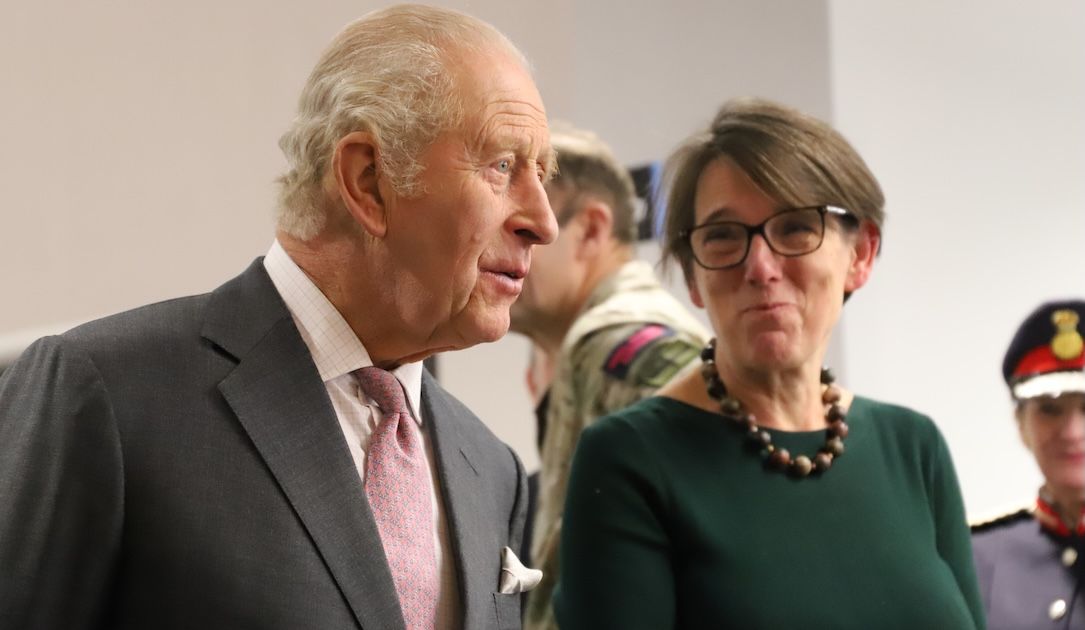
Ribble House, in Samlesbury, Lancashire, was opened by the King on Monday. The site was chosen five years ago and the government has committed £5 billion to the force through 2030, according to The Record. Staff come from GCHQ, the Ministry of Defence, MI6 and the Defence Science and Technology Laboratory.
GCHQ director Anne Keast-Butler said the force delivers "high-impact cyber operations every single day against those who threaten our interests". The force has a new commander in post since September, replacing Air Vice-Marshal Tim Neal-Hopes, though officials have not named the successor publicly.
What this means if you run a business
The practical read is not that you are a target of state hacking, but that the threat model officials describe is the same one that lands on ordinary organisations: credential theft, unpatched remote access and phishing.
- Assume state-grade attacks reach small organisations through suppliers rather than directly.
- Patch exposed remote access first. It is the route most commonly used in the incidents regulators describe.
- Turn on phishing-resistant sign-in for email and admin accounts, which is the single control that survives a stolen password.
If you have never audited your accounts, start with how to check whether a password has leaked, then read what a passkey changes before you decide on a second factor. Businesses handling customer data should also note how regulators have been treating device data, as in our report on Ofcom's file on smart speaker retention.
The bottom line
A serving general has confirmed on the record what was previously only implied: the UK runs offensive cyber operations, and it names four states as the reason. The capability is now public knowledge, which is the point. For everyone else, the useful takeaway is unchanged. The attacks that reach ordinary organisations look like stolen passwords and unpatched services, and those are fixable today.


